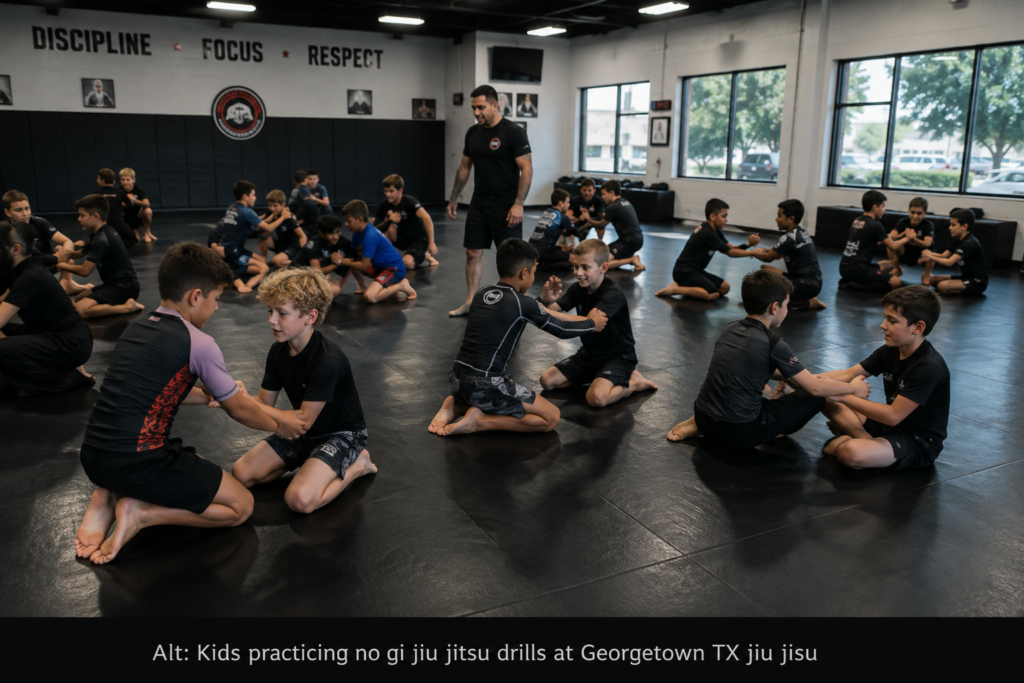
Is BJJ good for kids? Yes, and not just in the ways martial arts ads claim. A randomized controlled trial of 283 students found that martial arts training measurably improved resilience and self-efficacy compared to kids who didn’t train. Those are researcher words for two things every parent wants: a kid who doesn’t quit when something gets hard, and a kid who believes they can figure things out.
Here’s what that actually looks like on the mat, and what it costs in bruises and patience to get there.
What BJJ Actually Teaches a Kid
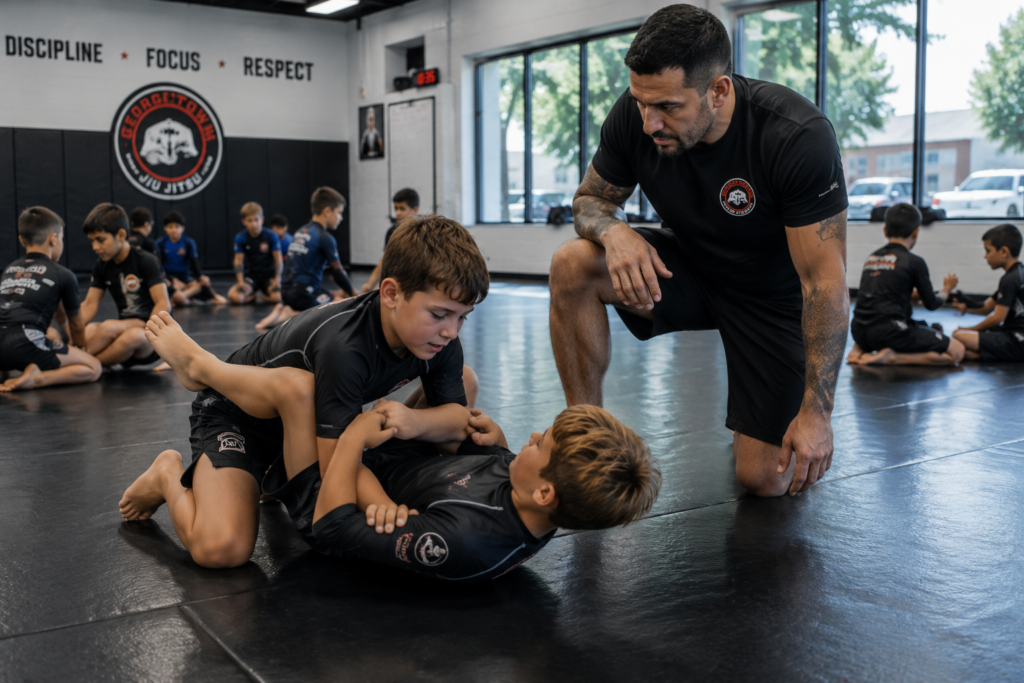
Brazilian Jiu Jitsu is grappling. No punches, no kicks. Kids learn to control position, escape bad spots, and problem-solve while someone is actively trying to stop them. That last part is the whole secret. Most activities kids do are performed alone or in parallel. BJJ is done against a resisting partner, which means every class includes losing, adjusting, and trying again in front of other people.
That cycle, repeated two nights a week, is where the confidence comes from. Not from trophies. From surviving Tuesday.
7 Benefits Parents Actually Ask About
- Discipline that transfers. The structure of a class, lining up, waiting your turn, drilling the boring fundamentals, follows kids into the classroom. Teachers tend to notice before parents do.
- Confidence without arrogance. A kid who trains knows exactly what they can and can’t do. That kind of tested confidence doesn’t need to announce itself.
- Bully-proofing that isn’t fighting. BJJ gives a kid the ability to control a situation without throwing a punch. Holding someone down until an adult arrives is not violence, and schools treat it very differently than a swing.
- Physical literacy. Balance, grip, hip movement, falling safely. These carry into every other sport a kid ever tries.
- Losing without falling apart. Every kid taps in practice, constantly. It stops being a catastrophe and starts being information. That reframe is worth the tuition by itself.
- A place for kids who don’t fit team sports. No bench, no tryouts, no getting cut. A kid who would never touch a football field can thrive here.
- Real friendships. Training partners trust each other in a way teammates don’t always have to. The kids who grapple together stick together.
What Age Should a Kid Start?
Most programs take kids from age five. Under five, attention span usually isn’t there yet, and that’s fine. Starting at eight, ten, or thirteen loses nothing. The best age to start is the age your kid is when they’re willing to try.
What the First Month Honestly Looks Like
The first month is mostly falling down and learning to be comfortable being close to other kids. Some kids love it immediately. Most don’t decide until week five or six, when they pull off one thing they couldn’t do before. Expect at least one “I don’t want to go” night. Take them anyway once, then evaluate.
Nothing is given, everything is earned, and kids figure that out faster than adults do.
Is BJJ Safe for Kids?
Safer than most parents expect. Kids classes are heavily supervised, there’s no striking, and technique is taught before any live grappling. Bumps and mat burns happen. Serious injuries in supervised kids BJJ are rare, and considerably less common than in football or cheer. Ask any gym how they run live rounds for kids. A good one will have a specific answer.
Frequently Asked Questions
Does my kid need to be athletic to start?
No. BJJ meets a kid where they are. Unathletic kids often improve the most because the sport gives them the coordination other sports assumed they already had.
How many classes a week is enough?
Two. More than three for a young kid usually leads to burnout. Consistency over volume, every time.
Will BJJ make my kid aggressive?
Research points the other way. Kids with an outlet for physical energy and a code around when to use it tend to show less aggression, not more.
BJJ or judo for a kid?
They complement each other. Judo emphasizes throws, BJJ emphasizes ground control. Many kids in our judo classes train both. Try whichever class schedule fits, and let the kid pick.
How long until a kid earns a new belt?
Kids belts move faster than adult belts, but expect months, not weeks. A gym that hands out belts quickly is selling belts, not teaching.
Try a Kids Class in Georgetown
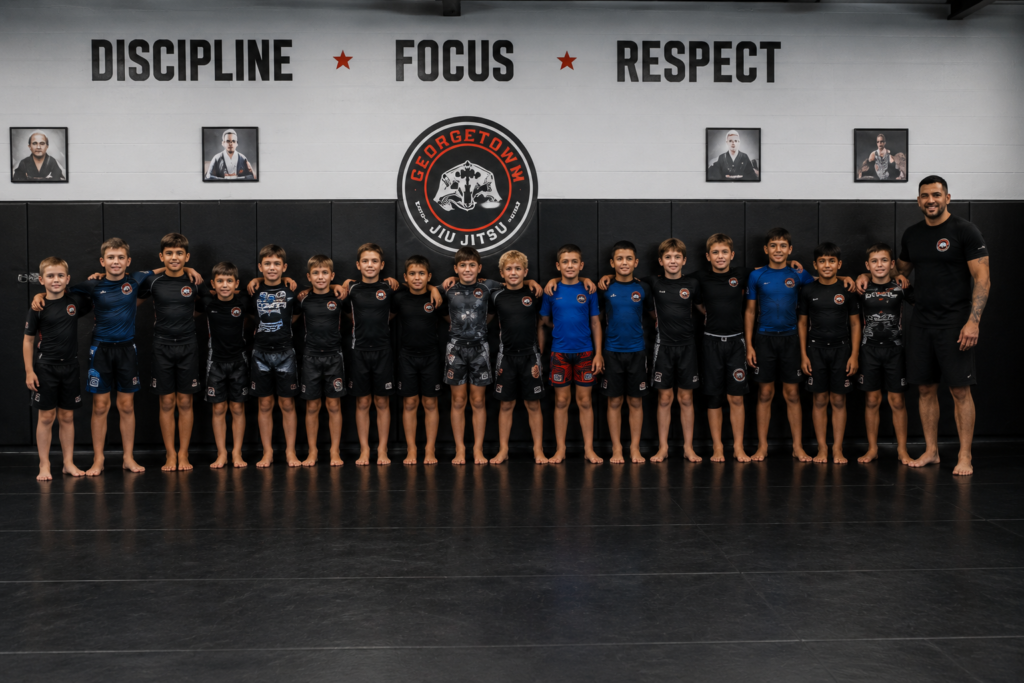
The honest way to answer “is BJJ good for kids” is to watch your own kid try it. Our kids jiu jitsu program in Georgetown TX runs beginner-friendly classes for ages 5-15, no experience needed, and the first class is free. Learn more about jiu jitsu in Georgetown TX, come watch from the bench, and see what week six looks like.