Jiu jitsu for bullying works because it solves the real problem, which is rarely the bully. It is the fear. According to stopbullying.gov, about one in five students reports being bullied at school. Most of those kids do not need to learn how to fight. They need to stop looking and feeling like an easy target. Brazilian jiu jitsu builds that change from the inside out, through calm confidence, body control, and the quiet certainty of a kid who knows they can handle themselves. For parents in Georgetown TX searching for a real answer, here is how it actually works.
Why Bullied Kids Need Control, Not Striking
Most martial arts teach kids to punch and kick. That creates a problem for a bullied child, because the only tool they learn is the one that escalates the situation and gets them suspended.
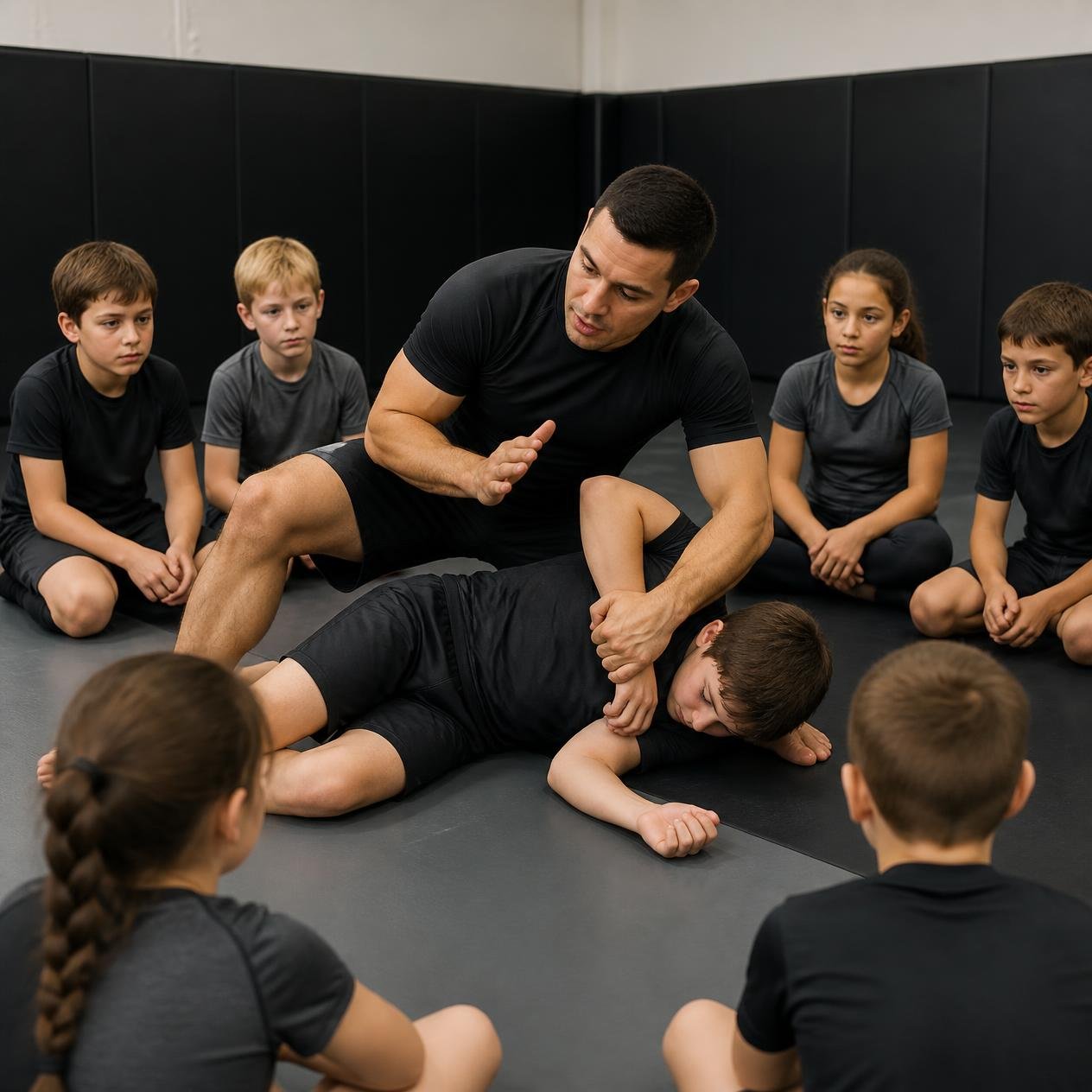
Jiu jitsu is different. It is a grappling art built on leverage and technique rather than size or strength. A child who trains BJJ learns to stay calm when someone grabs them, to control distance, to escape holds, and to neutralize a bigger, stronger aggressor without throwing a single punch. If a situation ever turns physical, a BJJ kid can pin or hold a bully until an adult arrives, with nobody getting hurt.
That distinction matters to schools, and it matters to parents. Control ends confrontations. Striking escalates them.
Will Jiu Jitsu Make My Child Aggressive?
This is the question we hear most from Georgetown parents, and the answer is no. In practice, the opposite happens.
Kids act out or melt down when they feel powerless. Training replaces that powerlessness with quiet competence. A child who spends two evenings a week solving hard physical problems against friendly resistance has nothing to prove on the playground. Researchers who study martial arts training in children consistently find lower aggression and better self-regulation, not more fighting.
There is also a structural reason. Every class runs under close coach supervision with strict rules about respect, control, and when techniques may be used. The culture teaches restraint as a skill, the same way it teaches escapes and pins.
Want to see that culture for yourself? Come watch a kids jiu jitsu Georgetown TX class any week, or let your child try one free.
Confidence Stops Verbal Bullying Too
Not all bullying is physical. Verbal bullying and social exclusion can be just as damaging, and they usually start long before anything physical ever would.
Jiu jitsu helps here in a way most parents do not expect. When a child feels secure in their own abilities, they stop reacting with fear or visible frustration when someone tries to provoke them. Bullies feed on emotional reactions. A kid who can shrug, hold eye contact, and walk away with poise takes the fun out of the game, and the teasing moves on. That composure is trained on the mat, round after round, by staying calm in uncomfortable positions until discomfort stops being scary.
5 Ways Jiu Jitsu for Bullying Actually Works
- Confidence that bullies can read. Bullies pick targets, not fights. Posture, eye contact, and calm body language change within weeks of training, and kids who carry themselves that way get picked far less often.
- Calm under pressure. Live grappling teaches kids to think while uncomfortable. That composure transfers directly to hallway confrontations, where panic is what makes situations spiral.
- Verbal boundaries first. Kids learn the talking part before the grappling part. Stand tall, say stop, walk away, tell an adult. The physical skills are the backup plan, not the first move.
- Real skills against bigger kids. Jiu jitsu was designed for a smaller person to control a larger one using leverage. For a bullied child, feeling a technique actually work against a bigger training partner is a turning point.
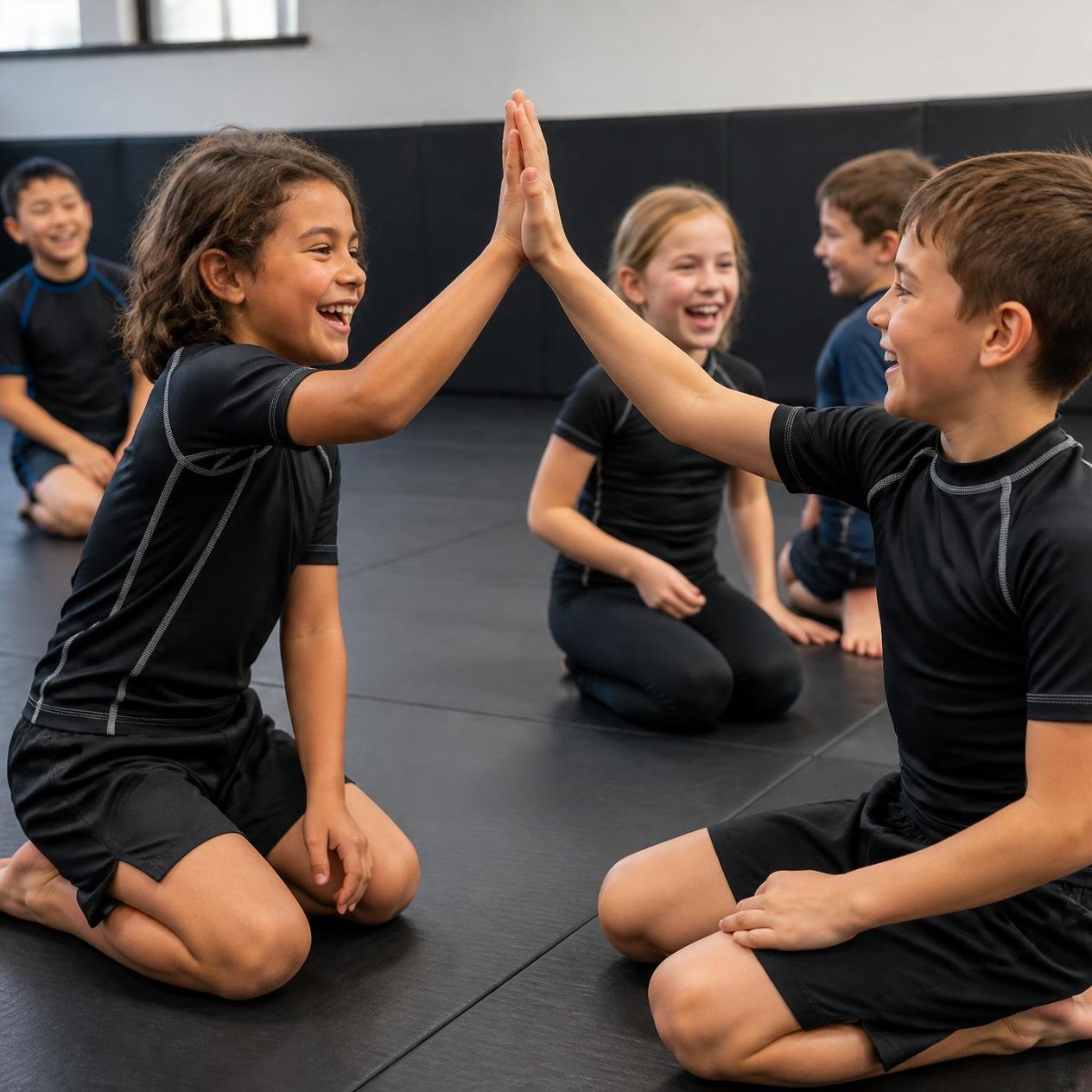
- A built-in crew. Isolation is fuel for bullying. Kids who train belong to a team that celebrates every stripe and picks each other up after every hard round. Belonging somewhere changes how school feels.
Why No-Gi Training Fits School Situations
Our kids classes train no-gi, meaning regular athletic clothes instead of the traditional uniform. For bullying prevention, that detail matters more than most parents realize.
A child will never face a playground situation wearing a gi. Traditional techniques that depend on sleeve and collar grips simply do not exist on a t-shirt or a hoodie. No-gi training builds control through body positioning, wrist control, underhooks, and body locks, skills that work no matter what anyone is wearing.
That real-world fit gives kids an extra layer of confidence. The skills they drill in class work in the clothes they wear every day, which makes the training feel less like abstract technique and more like a reliable tool they can count on.
What Georgetown TX Parents Should Know Before the First Class
Kids start as young as age 5, and no experience or fitness level is required. Classes are grouped by age so children train alongside peers at the same developmental stage: Little Grapplers for ages 5 to 7, Youth BJJ for ages 8 to 11, and Teen classes for ages 12 to 15. Younger groups focus on games, balance, and listening skills, while older kids move into technique and controlled live training, all on padded mats under coach supervision.
We serve families from Georgetown, Round Rock, Cedar Park, Pflugerville, Hutto, and Jarrell. Many parents also cross-train their kids in judo Georgetown TX classes, which build throws and safe falling skills that pair naturally with BJJ on the ground.
The first class is always free, with no contract and no pressure. Watch from the side and see how your kid responds.
Frequently Asked Questions
Does jiu jitsu help with bullying?
Yes. Jiu jitsu reduces bullying risk in two ways. Confidence and body language make kids less likely to be targeted, and control-based grappling skills let them stay safe without punching or kicking if a situation ever turns physical.
Will jiu jitsu make my child more aggressive?
No. Studies of children in martial arts consistently show reduced aggression and better self-control. BJJ gives kids an outlet for energy and a sense of competence, which removes the insecurity that drives most acting out.
What age can kids start jiu jitsu for bullying prevention?
Kids can start at age 5. Classes run in three age groups, Little Grapplers for ages 5 to 7, Youth BJJ for ages 8 to 11, and Teen for ages 12 to 15, so children build confidence alongside peers at their own stage.
Will my child get in trouble for using jiu jitsu at school?
Jiu jitsu is the lowest-risk option for school situations because there is no striking. Kids learn to escape, create distance, and control, and they are taught that technique is a last resort after words and walking away.
How long before I see a difference in my child?
Most parents notice posture and confidence changes within 4 to 8 weeks of consistent training, usually two classes per week. Skill milestones like stripes give kids visible proof of progress along the way.
Try a Free Kids Class in Georgetown TX
The fastest way to know if jiu jitsu is right for your child is one class. Bring them by, let them try it free, and watch what happens. No contract, no experience needed, just a safe first step toward a more confident kid. Our full jiu jitsu Georgetown TX program has classes for every age and level.
📞 Call or text (512) 861-8414 to book your child’s free trial class.