
Georgetown TX is growing fast. Commutes to Austin stretch longer every year. The small-town community feel that drew many families here can be harder to find than the brochures suggested. Stress accumulates. Anxiety becomes background noise. Some days the weight feels unshiftable — and no amount of running or lifting quite reaches it.
That is where Jiu Jitsu for Depression Georgetown TX enters the picture. Not as a medical fix. Not as a replacement for therapy or medication. But as a surprisingly powerful tool for resetting both body and mind — one that an increasing number of Georgetown residents, both adults and parents of struggling kids, are turning to for real, lasting relief.
Why Standard Exercise Often Falls Short
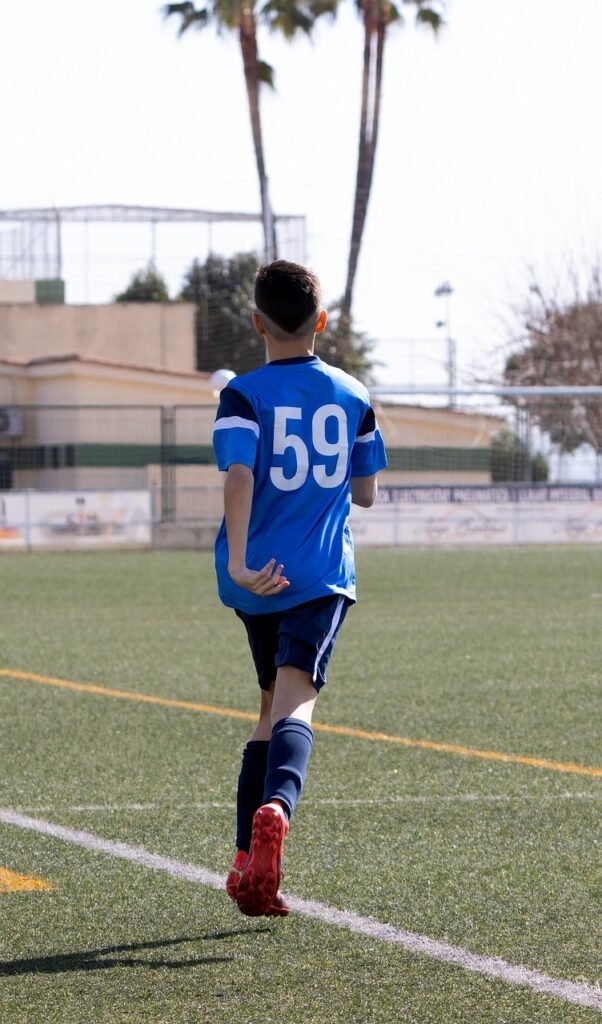
Going for a jog or hitting the elliptical can temporarily lift your mood. The problem is that repetitive exercise rarely addresses the root drivers of depression or anxiety — rumination, isolation, low self-worth, and the feeling of being trapped in your own head.
Standard gym workouts lack three things that make Brazilian Jiu-Jitsu uniquely effective for mental health:
Mental engagement. BJJ requires active problem-solving. Every round is a live puzzle that demands your full attention. You cannot ruminate about work or replay an argument when someone is trying to take your back.
Physical connection. Human contact is a neurological need. Rolling with a training partner triggers natural releases of oxytocin and endorphins that isolated exercise simply cannot replicate.
Community. At a regular gym, everyone is in their own world — headphones on, eye contact avoided. Jiu jitsu requires you to interact, cooperate, and trust. That distinction matters enormously for people dealing with depression.
The Neurochemistry: What BJJ Actually Does to Your Brain
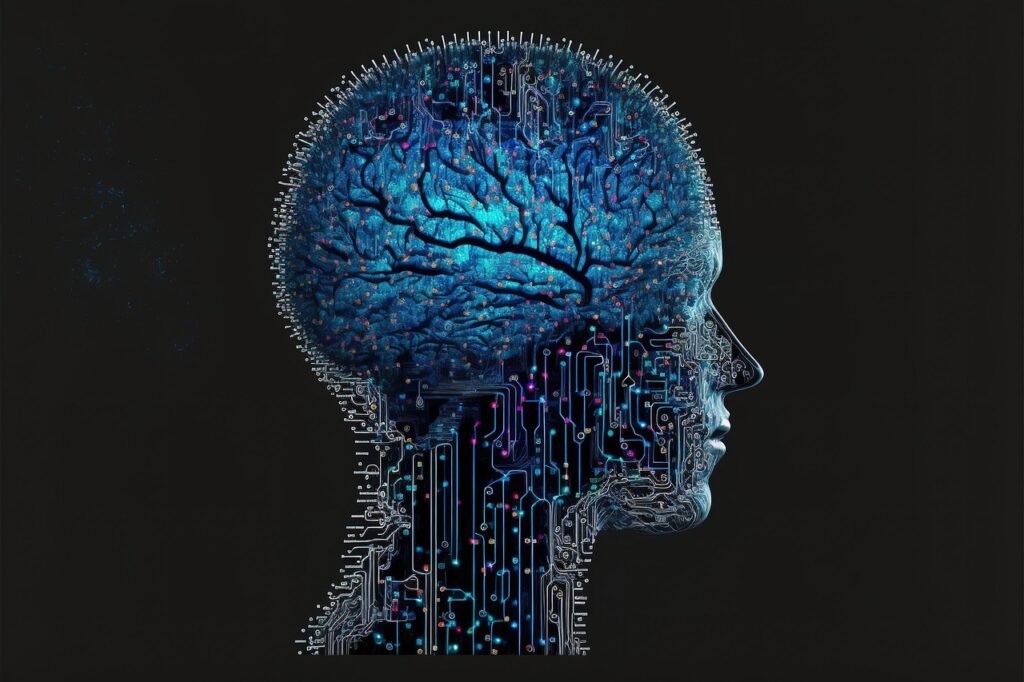
The mental health benefits of jiu jitsu are not anecdotal — they are physiological.
Intense physical exertion releases endorphins, the body’s natural mood elevators. Regular BJJ training also increases serotonin and dopamine levels, two neurotransmitters that are chronically low in people with clinical depression. These are the same chemical pathways that antidepressant medications target — jiu jitsu activates them through movement, contact, and competition.
Beyond neurochemistry, the forced present-moment focus of live rolling functions similarly to mindfulness practice. Your brain cannot process past regrets or future anxieties when it is fully occupied with surviving a triangle choke. That temporary suspension of rumination, practiced consistently over weeks and months, begins to rewire habitual thought patterns.
Research has shown that Brazilian Jiu-Jitsu training helps reduce stress, improve mental health outcomes, and support better sleep quality — three areas that are almost universally disrupted in people dealing with depression.
Why No-Gi Specifically: The Intensity Advantage
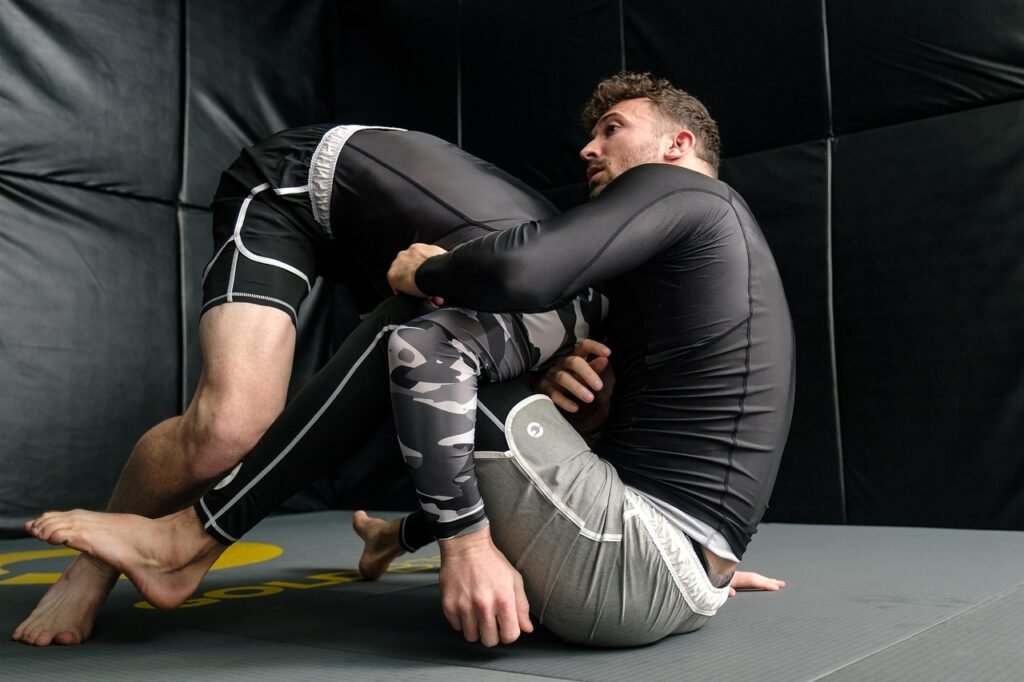
No-gi jiu jitsu removes the traditional uniform and relies on body positioning and grip fighting rather than grabbing fabric. The result is a faster, more physically demanding experience that keeps your mind fully occupied from the first minute to the last.
For someone dealing with depression or anxiety, that forced engagement is the point. There is no mental bandwidth left for intrusive thoughts. You are entirely in your body, entirely in the moment.
No-gi also removes a practical barrier: you do not need to purchase a gi uniform to get started. A rash guard and shorts are all you need. When motivation is already low — which is the reality of depression — removing friction from the entry point matters.
The Community Effect: Why BJJ Gyms Feel Different
This is the factor most people do not anticipate, and the one that ends up meaning the most.
Because jiu jitsu requires a partner for every drill and every round, you cannot train without interacting. You have to trust the person across from you. You have to communicate. Over time, that forced cooperation builds genuine bonds — the kind that are increasingly rare in a suburban Texas commuter city.
Georgetown TX students consistently report that the friendships formed on the mat become a meaningful support network. Training alongside people who know what hard feels like, even without ever discussing it directly, creates a sense of belonging that directly counteracts the isolation at the core of depression.
The environment matters too. A well-run jiu jitsu gym has an ego-free culture by necessity — ego gets you hurt. That safety allows students to show up exactly as they are, without performing wellness they do not feel.
Jiu Jitsu for Depression Georgetown TX: A Parent’s Perspective

Everything above applies to children — often more powerfully, because the formative years are when resilience either gets built or doesn’t.
Depression in children is a growing concern for families across Georgetown and surrounding communities including Round Rock, Cedar Park, Hutto, Pflugerville, and Jarrell. Parents are increasingly looking for structured, physical activities that address the emotional roots of childhood depression rather than just its symptoms.
Kids jiu jitsu Georgetown TX programs offer several specific benefits for children struggling with depression:
Confidence through skill progression. Depression erodes self-worth. A structured jiu jitsu program gives children clear, achievable goals — and the genuine accomplishment of mastering a new technique is something that cannot be faked or given. Kids earn it, and they know they earned it.
Controlled adversity builds resilience. Depression often leaves children feeling helpless when facing challenges. Jiu jitsu exposes them to controlled difficulty in a safe setting — uncomfortable positions, scrambles, setbacks — and teaches them to stay calm, problem-solve, and persist. That never-give-up attitude carries directly into academic and social challenges.
Social connection reduces isolation. Children with depression frequently feel disconnected from peers. No-gi jiu jitsu requires trust and close cooperation with training partners, which gradually reduces social anxiety and helps children form real friendships in a context that does not feel forced.
Improved focus and emotional regulation. The structured routine of class — warm-up, drilling, live rounds, cool-down — helps regulate the nervous system. Parents consistently report improvements in focus, emotional control, and overall attitude after their children begin training consistently.
Most Georgetown TX programs offer kids classes starting at age 5. No prior experience is needed, and no-gi training means no uniform to purchase — just a rash guard and shorts.
What Georgetown TX Students Experience After Starting
The changes people report after committing to jiu jitsu are consistent regardless of age:
- Reduced irritability and emotional reactivity
- Better sleep quality within the first few weeks
- Increased confidence in non-mat situations
- A general sense of being more grounded and less reactive to stress
- Real friendships formed outside of work or school contexts
Georgetown residents who commute to Austin frequently describe their evening jiu jitsu session as the reset button that separates work stress from home life. The structured rhythm of class — the same warmup, the same drilling format, the same familiar faces — provides a reliable anchor that depression disrupts and that consistency helps restore.
How to Start When Motivation Is Already Low
Depression makes everything harder, including the act of signing up for something new. This is worth naming directly.
Local jiu jitsu programs in Georgetown TX offer free trial classes with no financial commitment and no obligation. You do not need to be in shape. You do not need any prior experience. You do not need to be okay. You just need to get through the door once.
No-gi classes are beginner-friendly by design. The pace is controlled by your comfort level. The culture in quality programs is explicitly non-intimidating — instructors understand that new students are often dealing with more than they show.
If you are coming from Round Rock, Cedar Park, Hutto, or Pflugerville, the drive is manageable. The first class is the hardest part. Every Georgetown TX student who started jiu jitsu while struggling with depression says the same thing: they have never regretted walking through that door.
Conclusion
Jiu jitsu will not cure depression. Nothing that fits in a weekly schedule will. But for adults grinding through stress and disconnection in a fast-growing suburb, and for children who need structure, community, and a place to build genuine confidence, it offers something that standard exercise, therapy, and medication rarely provide on their own: a reason to show up, a room full of people who need you there, and a practice that demands everything you have for exactly one hour.
That is often enough to change the trajectory.
If you are ready to see how no-gi jiu jitsu Georgetown TX can support your mental health — or your child’s — a free trial class is available with no commitment and no pressure. Just come roll, breathe, and see what changes.
According to the National Institute of Mental Health, regular physical activity is a clinically recognized component of depression treatment.
📞 Call to Book Your Free Trial Class Today
Frequently Asked Questions
Can jiu jitsu really help with depression?
Many Georgetown TX adults and children have found that regular jiu jitsu training meaningfully reduces symptoms of depression and anxiety. The combination of physical exertion, neurochemical release, present-moment focus, and genuine community addresses multiple drivers of depression simultaneously. It is not a replacement for professional care but works powerfully as a complementary practice.
Is no-gi jiu jitsu good for beginners dealing with anxiety?
Yes. No-gi requires no special uniform, which removes one barrier for anxious beginners. The class structure is predictable, the pace is controlled by your comfort level, and quality programs in Georgetown TX prioritize a supportive, ego-free atmosphere. Most students report that anxiety about starting diminishes significantly after the first class.
How often do I need to train to see mental health benefits?
Most people notice measurable improvements in mood and stress levels after training two to three times per week for several weeks. Consistency matters more than intensity. Even one class can provide immediate relief from a difficult day, but building a routine creates the lasting neurochemical and psychological changes that make a real difference.
What age can kids start jiu jitsu in Georgetown TX?
Most Georgetown TX programs offer kids classes starting at age 5. Classes are designed for children with no prior experience and emphasize character development, confidence, and a safe team environment alongside the physical skills.
Is there a jiu jitsu gym in Georgetown TX that welcomes beginners?
Yes. Georgetown has programs that offer free trial classes for adults and children with no prior experience required. Students from Round Rock, Cedar Park, Hutto, Pflugerville, and Jarrell regularly train in Georgetown. No uniform is needed — just a rash guard and shorts.
Can jiu jitsu replace therapy or medication for depression?
No. Jiu jitsu is a complementary activity that supports mental health — it does not replace professional medical or psychological treatment. Adults and parents of children dealing with clinical depression should work with a healthcare provider to determine the best overall treatment plan, which may include jiu jitsu as one component.